
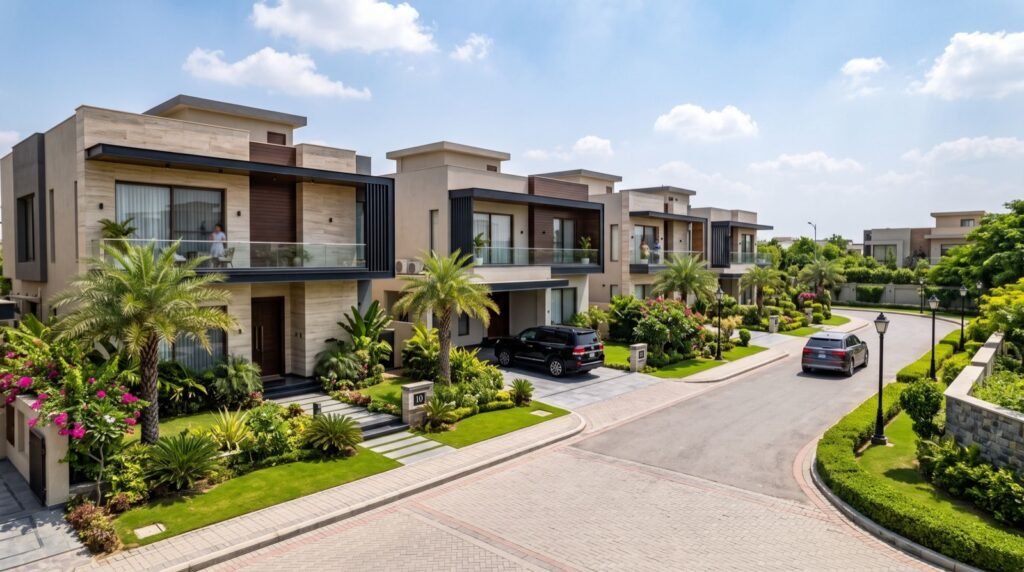
Real-estate investment ROI is what turns a plot of land from a passive holding into a genuine wealth engine, and few markets illustrate that better than the Rawalpindi–Islamabad corridor in 2026. Investors keep returning to property because it blends steady appreciation with real inflation protection, something few other assets in Pakistan reliably offer. Yet strong returns are never automatic. They come from disciplined timing, careful location choices, and a clear grasp of the numbers behind each deal.
This guide breaks down how return on investment actually works in Pakistani real estate, how to calculate it honestly, and which strategies tend to outperform. Whether you are deploying your first modest amount into a plot file or expanding a growing portfolio, the frameworks below will help you buy with a plan rather than a hope.
What Drives Returns in Pakistani Real Estate?
ROI in property comes from two engines: capital appreciation and, where you build or rent, rental yield. In the twin-cities market, appreciation has historically been the dominant driver, especially in societies that begin cheap and mature into fully developed neighbourhoods.
The classic strategy is simple to state and hard to time: buy early in an approved, well-located scheme, hold through the development phase, and sell once infrastructure and demand catch up. Affordable entry points, such as Cheap residential plots in pakistan, often deliver the steepest percentage gains precisely because they enter at a low base and rise as the society completes.
How Do You Calculate Real-Estate ROI?
Honest math protects you from wishful thinking. The core formula is straightforward, but you must include every cost, not just the purchase price.
ROI equals your net profit divided by your total investment, expressed as a percentage. Net profit is the sale price minus the purchase price, minus all fees, taxes, and holding costs. A plot that “doubled” on paper may deliver a far smaller real return once you subtract transfer taxes, agent commissions, and years of instalment payments.
| Investment Type | Return Source | Typical Horizon | Risk Level |
|---|---|---|---|
| Residential plot | Capital appreciation | 3–5 years | Moderate |
| Commercial plot | Appreciation + rent | 3–7 years | Moderate–high |
| Built house | Rent + appreciation | 5–10 years | Moderate |
| Plot file (pre-launch) | Speculative gain | 1–3 years | High |
Commercial parcels can lift blended returns because they combine appreciation with rental income. Options like 4 Marla Commercial Plots appeal to investors who want both a growing asset and a future income stream from shops or offices.
Residential vs. Commercial: Where Is the Better ROI?
Neither category wins in every scenario. The right choice depends on your capital, your risk appetite, and how actively you want to manage the asset.
- Residential plots are cheaper, more liquid, and easier for first-time investors to sell.
- Commercial plots cost more but can generate rent and higher absolute returns.
- Residential suits passive, buy-and-hold investors seeking steady appreciation.
- Commercial rewards those willing to develop, lease, and manage tenants.
A balanced portfolio often holds both: residential plots for liquidity and safety, plus a commercial parcel for yield and upside. Diversifying across categories smooths your returns when one segment cools.
Smart Strategies to Maximise Your Returns
The investors who consistently win tend to follow a repeatable playbook rather than chasing tips. These principles apply whether the market is hot or cooling.
- Buy early in approved societies before development pushes prices up.
- Prioritise location and access, since these drive the strongest appreciation.
- Verify legal status first, because a disputed plot has no exit value.
- Hold long enough to capture the full development cycle, not just a quick flip.
- Track market data and sell into strength rather than panic.
Independent research bodies such as the World Bank regularly note how organised urban housing supports long-term economic value, and that macro backdrop reinforces the case for disciplined, location-led investing in Pakistan’s growing cities.
Managing Risk and Timing Your Exit
Every return carries a matching risk, and ignoring that is how investors get hurt. Illiquidity, disputed titles, and market cycles can all erode gains if you enter carelessly or exit at the wrong moment.
Set a target return and a realistic time horizon before you buy. Avoid over-leveraging on instalment plans you cannot sustain if income dips. When you are ready to transact, work with dependable specialists who know local pricing, so you neither undersell in a rush nor overpay in a frenzy.
Building a Balanced Property Portfolio
Seasoned investors rarely bet everything on a single plot. They spread capital across sizes, locations, and stages of development to smooth their returns and reduce the sting of any one deal disappointing.
A practical starter portfolio might pair a liquid residential plot in an approved society with a smaller, higher-upside file in a newer scheme. As equity builds, you can add a commercial parcel for yield or a second residential plot in a different society. Diversifying across at least two locations protects you if one area cools while another heats up.
Reinvesting your gains compounds the effect. Rather than spending the profit from a successful sale, disciplined investors roll it into the next well-researched opportunity. Over several cycles, this patient recycling of capital is what turns a modest starting sum into a substantial property base, and it is the strategy that quietly builds most real-estate fortunes in Pakistan.
Frequently Asked Questions
What is a good ROI for real estate in Pakistan?
Returns vary by location and timing, but investors in well-chosen, approved societies often aim for meaningful double-digit annual appreciation over a three-to-five-year hold. The strongest gains usually go to early buyers in developing schemes with solid infrastructure plans.
Do plots or built houses give better returns?
Plots typically appreciate faster in percentage terms and cost less to hold, since they need no maintenance. Built houses add rental income but carry upkeep costs. Many investors start with plots for growth and add houses later for cash flow.
How long should I hold a plot to profit?
A three-to-five-year horizon usually lets you capture the full development cycle, when roads, utilities, and demand mature. Selling too early can mean leaving substantial appreciation on the table, especially in newer, fast-developing societies.
Is commercial property riskier than residential?
Commercial plots often carry higher entry costs and depend on business demand, which adds risk. But they can also deliver stronger blended returns through rent plus appreciation. Match the choice to your capital and your willingness to manage the asset actively.
Conclusion: Invest With Numbers, Not Emotion
Real-estate investment ROI rewards investors who respect the math, verify the legal status, choose location wisely, and hold with patience. Calculate every cost, diversify across residential and commercial where possible, and let data rather than hype guide your entry and exit. Do that consistently and property remains one of the most dependable paths to building wealth in 2026.
Ready to put these principles to work? Compare approved, well-located plots today, run the numbers honestly, and secure an asset positioned to grow. Your next smart investment could be the cornerstone of long-term financial security.